Skip to content
  • Finnish Government
    • Prime Minister's Office
    • Ministry of Defence
    • Ministry of Transport and Communications
    • Ministry for Foreign Affairs
    • Ministry of Finance
    • Ministry of Economic Affairs and Employment
    • Ministry of Justice
    • Ministry of Education and Culture
    • Ministry of Social Affairs and Health
    • Ministry of the Interior
    • Ministry of Agriculture and Forestry
    • Ministry of the Environment

Valitse kieli:

This page is in Finnish. Go to the English site »

Or choose language:

Den här sidan är på finska. Gå till den svenska versionen av sidan »

Eller välj språk:

Dát siidu lea suomagillii. Sirdás davvisámegielat siidduide »

Dahje vállje giela:

Язык этого сайта финский. Перейти на русскоязычный сайт »

Или выберите язык:

Cette page est en finnois. Aller sur le site en français »

Ou choisir la langue:

Diese Seite ist auf Finnisch. Wechseln Sie zur deutschen Version »

Oder wählen Sie Ihre Sprache:

Tämä sivu on englanniksi. Siirry suomenkieliseen sivustoon »

Tai valitse kieli:

Choose language:

Den här sidan är på engelska. Gå till den svenska versionen av sidan »

Eller välj språk:

Язык этого сайта английский. Перейти на русскоязычный сайт »

Или выберите язык:

Dát siidu lea eŋgelasgillii. Sirdás davvisámegielat siidduide »

Dahje vállje giela:

Cette page est en anglais. Aller sur le site en français »

Ou choisir la langue:

Diese Seite ist auf Englisch. Wechseln Sie zur deutschen Version »

Oder wählen Sie Ihre Sprache:

Tämä sivu on ruotsiksi. Siirry suomenkieliseen sivustoon »

Tai valitse kieli:

This page is in Swedish. Go to the English site »

Or choose language:

Välj språk:

Язык этого сайта шведский. Перейти на русскоязычный сайт »

Или выберите язык:

Dát siidu lea eŋgelasgillii. Sirdás davvisámegielat siidduide »

Dahje vállje giela:

Cette page est en suédois. Aller sur le site en français »

Ou choisir la langue:

Diese Seite ist auf Schwedisch. Wechseln Sie zur deutschen Version »

Oder wählen Sie Ihre Sprache:

Tämä sivu on pohjois-saameksi. Siirry suomenkieliseen sivustoon »

Tai valitse kieli:

This page is in North Saami. Go to the English site »

Or choose language:

Den här sidan är på nordsamiska. Gå till den svenska versionen av sidan »

Eller välj språk:

Язык этого сайта северосаамский. Перейти на русскоязычный сайт »

Или выберите язык:

Vállje giela:

Cette page est en same du Nord. Aller sur le site en français »

Ou choisir la langue:

Diese Seite ist auf Nordsamisch. Wechseln Sie zur deutschen Version »

Oder wählen Sie Ihre Sprache:

Tämä sivu on venäjäksi. Siirry suomenkieliseen sivustoon »

Tai valitse kieli:

This page is in Russian. Go to the English site »

Or choose language:

Den här sidan är på ryska. Gå till den svenska versionen av sidan »

Eller välj språk:

Dát siidu lea ruoššagillii. Sirdás davvisámegielat siidduide »

Dahje vállje giela:

выберите язык:

Cette page est en russe. Aller sur le site en français »

Ou choisir la langue:

Diese Seite ist auf Russisch. Wechseln Sie zur deutschen Version »

Oder wählen Sie Ihre Sprache:

Tämä sivu on ranskaksi. Siirry suomenkieliseen sivustoon »

Tai valitse kieli:

This page is in French. Go to the English site »

Or choose language:

Den här sidan är på franska. Gå till den svenska versionen av sidan »

Eller välj språk:

Dát siidu lea fránskkagillii. Sirdás davvisámegielat siidduide »

Dahje vállje giela:

Язык этого сайта французский. Перейти на русскоязычный сайт »

Или выберите язык:

Choisir la langue:

Diese Seite ist auf Französisch. Wechseln Sie zur deutschen Version »

Oder wählen Sie Ihre Sprache:

Tämä sivu on saksaksi. Siirry suomenkieliseen sivustoon »

Tai valitse kieli:

This page is in German. Go to the English site »

Or choose language:

Den här sidan är på tyska. Gå till den svenska versionen av sidan »

Eller välj språk:

Язык этого сайта немецкий. Перейти на русскоязычный сайт »

Или выберите язык:

Cette page est en allemand. Aller sur le site en français »

Ou choisir la langue:

Wählen Sie Ihre Sprache:

  • Valitse kieli Suomi
  • Välj språket Svenska
  • Select language English
Media
Ministry of Economic Affairs
Navigation
  • Frontpage
  • Responsibilities
    • Enterprises
    • Enterprise financing
    • Working life
    • Energy
    • Competition and consumers
    • Regions
    • Labour migration and integration
    • Security of supply
  • Current issues
  • Projects and legislation
  • Publications
  • Ministry
  • Contact information
  • Press releases
  • News
  • Columns
  • Sign up for news
  • Social media and webcasts
  • Russian attack on Ukraine
suomiLue artikkeli suomeksi svenskaLäs artikeln på svenska English

Finnish Government: Funding for the EU’s Connecting Europe Facility should be directed towards security
Ministry of Economic Affairs and EmploymentMinistry of Transport and Communications
Publication date 13.11.2025 13.29 | Published in English on 14.11.2025 at 9.31
Type:Press release
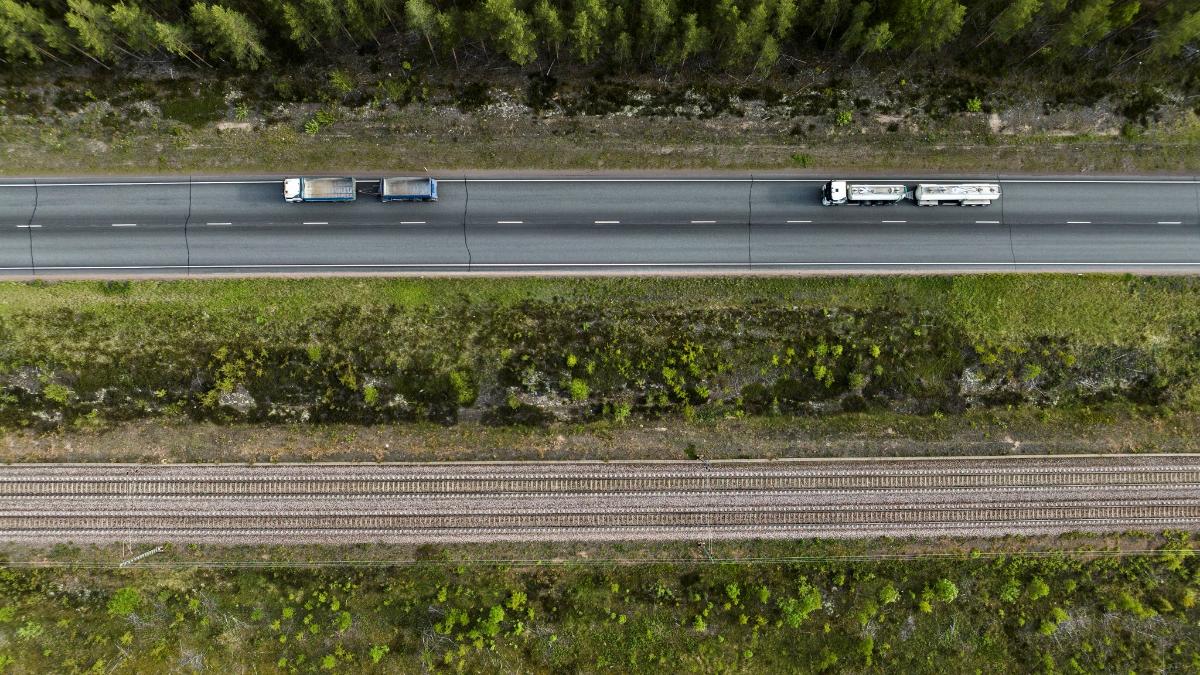
Photo: Markus Pentikäinen, Keksi/LVM

The Finnish Government submitted a communication to Parliament on 13 November 2025 regarding the European Commission’s proposal for a Regulation on the Connecting Europe Facility for the period 2028–2034. The Government welcomes the proposal and emphasises that funding should be more strongly directed towards strengthening defence and security, among other sectors. 

The Connecting Europe Facility (CEF) aims to develop trans-European transport and energy networks. The proposed funding for transport and energy network investments totals EUR 72.25 billion in constant 2025 prices. Of this, EUR 45.75 billion is proposed for transport sector actions, with EUR 15.75 billion allocated to military mobility. EUR 26.5 billion is proposed for energy-related actions.

Finland underlines military mobility and the country’s specific conditions

The proposed Regulation includes increases in transport appropriations. For military mobility, the proposed EUR 15.75 billion appropriation is ten times higher than the current CEF funding. The proposal prioritises cross-border connections, identifying the Umeå–Luleå–Oulu corridor and its maritime ports as key links from Finland’s perspective. Funding would also support the completion of the smart, resilient, decarbonised and sustainable trans-European transport network (TEN-T).

At the outset, Finland welcomes the proposed regulation and finds it important that funding be allocated to the most effective projects through competitive processes. With regard to transport funding, Finland stresses that the various financial instruments within the framework should complement each other appropriately.

Finland is in favour of the emphasis on military mobility. Finland considers it essential that funding be directed to the most critical targets for European security and defence, especially to the countries along the eastern flank. Finland’s key objective in military mobility is to secure future funding for the transition to the standard European track gauge.

It is also important for Finland that the proposal takes into account the country’s specific conditions and its geographic location along the EU’s eastern flank, where cross-border land connections with other Member States are limited. Finland also considers it important that the cross-border dimension be extended to cover European transport corridors more broadly, so that the most critical needs of Finland’s national transport system are eligible for CEF funding. This would ensure Finland’s position is as equal as possible to other EU countries in terms of funding.

Energy sector funding proposed for electricity and hydrogen networks and smart grids

The European Commission proposes a significant increase in CEF funding for the energy sector. The aim is to strengthen the functioning of the Energy Union, improve the integration and competitiveness of energy markets, and ensure affordable and secure energy supply. These goals also promote the achievement of the climate and energy targets for 2030 and climate neutrality by 2050.

Expanding and modernising energy transmission networks is a key prerequisite for the deployment of renewable energy, electrification of industry, decarbonisation and the functioning of the internal market. Energy infrastructure development also supports the EU's energy self-sufficiency, competitiveness, and climate and energy goals.

Finland considers it important that CEF funding continue to be used exclusively for inter-state infrastructure projects. Finland has previously received funding for projects such as the construction of Fingrid’s Estlink2 submarine cable to Estonia, the Aurora Line electricity transmission link to Sweden and the Balticconnector gas pipeline to Estonia.

CEF Regulation as part of the EU multiannual funding package

The proposal for the CEF Regulation is part of the EU’s next Multiannual Financial Framework, published on 16 July 2025. The Regulation would establish a new CEF programme, confirming its objectives and budget for 2028–2034 and laying down the forms of EU funding available and the rules for granting it.

As the proposal is more general than the current CEF Regulation, the work programme to be prepared in the coming years will define the criteria for allocating funding and the different funding levels. The proposal does not include provisions on eligible projects or detailed appropriation levels.

Digital communications infrastructure would no longer be funded under the CEF, as funding would instead come from the European Competitiveness Fund.

Next steps

The Government's Union communication will next be debated in Parliament. 

The Commission's proposal for the CEF Regulation will be discussed in the Council of the EU, with Finland actively participating. The Danish Presidency of the Council of the EU seeks to reach a general approach to the proposal by the end of 2025.

Inquiries:

Ministry of Transport and Communications:

Kaisa Kuukasjärvi, Senior Ministerial Adviser, tel. +358 295 342 030, [email protected] 

Ministry of Economic Affairs and Employment:

Maria Kekki, Ministerial Adviser, tel. +358 295 047 108, [email protected] 

Decisions of government plenary session on 13 November 2025 (in Finnish)
Finnish Government: EU Multiannual Financial Framework for 2028−2034
Parliament: Government report: Commission communication and proposals for the multiannual financial framework for 2028–2034; Europe communication (in Finnish)
EU decisions energy influencing multiannual financial frameworks traffic
Back to top

Shortcuts

  • Contact information
  • Personnel search
  • Organisation
  • Strategy of the Ministry and its administrative branch
  • Communications Unit
  • Sign up for press releases and columns

The website

About the website

Change cookie settings

Data protection

Accessibility statement

Sitemap

Contact information

P.O. Box 32, FI-00023
GOVERNMENT

Tel. +358 295 16001

            Ministry of Economic Affairs and Employment
Search page
  • Frontpage
  • Responsibilities
    • Enterprises
      • Industrial policy
        • Promotion of entrepreneurship
          • Growth Entrepreneurship Programme
        • EU industrial policy
      • Innovation policy
        • Ecosystem policy
          • Innovative cities and corporations
        • Innovation policy evaluation
          • Utilisation of research and expertise
        • Innovative public procurement
        • Innovation-friendly regulation
          • What is innovation-friendly regulation?
          • Promotion of innovation-friendly regulation in the EU and internationally
        • Industrial property rights
          • Employment Invention Committee
        • EU research and innovation policy
          • European Digital Innovation Hubs
          • How Finland’s Digital Innovation Hubs were created
        • International research and innovation cooperation
      • Focus areas
        • Tourism
          • Economic impacts of tourism
          • Employment in tourism
          • Finland's Tourism Strategy
          • Tourism actors
          • Public subsidies for developing tourism
          • Domestic tourism
        • Maritime industry
          • Icebreaker initiative ICE Pact
        • Arctic Policy
          • Finland's Strategy for the Arctic Region
        • Space policy
          • The Finnish Space Committee
            • The Finnish Space Committee Secretariat
          • The National Strategy for Finlands Space Activities
          • International space cooperation
          • National space legislation
          • Authorisation for space activities
          • Registry of space objects
          • Supervision of space activities
        • Business digitalisation for companies
          • Data economy growth programme
            • Pilot projects of the data economy growth programme
          • AI Regulation
          • EU AI Board and its sub-groups
        • Minerals policy
          • Minerals Strategy
          • Minerals sector
            • EU Critical Raw Materials Act
          • Minerals sector´s links and publications
        • Creative economy
        • Bioeconomy
      • Regulation of business operations
        • Freedom of enterprise in Finland
        • Accounting
          • Accounting Board
        • Auditing
        • Finnish Trade Register
        • Technical safety
          • Market surveillance
          • Market surveillance programmes
          • Assessing the functioning of market surveillance
          • Safety of toys
          • New EU regulation on market surveillance and compliance of products
        • Debt collection
        • Real estate brokerage agencies and letting agencies
        • Accommodation and catering business
        • Travel Service Combinations
        • Industrial property rights
      • Internationalisation of enterprises
        • Foreign corporate acquisitions
          • Questions and answers about the act on the screening of foreign corporate acquisitions
        • Foreign investments
      • Single market of the EU
        • Product Contact Point
          • Free movement of goods within the single market
          • General requirements for products in Finland
          • Other national product regulations
          • Product regulation at the EU level
          • Mutual recognition of goods in the EU
        • Administrative cooperation between the authorities in the single market
        • Authorities' notification obligations
        • Trade barriers
          • SOLVIT
          • SMET
        • EU Regulation of Digital platforms
          • Relationship between online platforms and businesses
          • Digital Markets Act
        • Internal Market Emergency Act
      • Business services
      • Corporate social responsibility (CSR)
        • Business and human rights
        • Key guidelines on CSR
        • Handling Specific Instances of the OECD Guidelines for Multinational Enterprises
          • Questions and answers about the OECD National Contact Points
          • Specific Instances in Finland
        • Socially responsible public procurement
        • Committee on Corporate Social Responsibility
        • CSR reporting
        • Anti-corruption work
        • Combating forced labour
        • Due diligence obligation of companies
    • Enterprise financing
      • Loans, guarantees and credits
      • Finnish Industry Investment
      • Enterprise developmental support
      • Supporting internationalisation
      • Research, development and innovation funding
        • Plan for research and development funding
      • General criteria for business subsidies on national level
        • Advisory Committee on Business Subsidy
        • Research Division on Business Subsidies
    • Working life
      • Labour legislation
        • Employment contract and employment relationship
          • Concluding an employment contract
            • Lay-offs and terminating employment relationship
            • Employment security during military or non-military service
          • Questions and answers on restraint of non-competition agreements
          • Family leave
            • Pregnancy leave, parental leave and childcare leave
          • Young workers
            • Light work suitable for young persons
            • Work that are not allowed to do or is hazardous to young persons
          • Posted workers
            • Obligation to notify
          • Working at sea
        • Working time and annual holiday
          • Working time
          • Annual holiday
        • Improving and maintaining employees’ competence
          • Study leave
        • Non-discrimination and equality in working life
          • Promotion of non-discrimination in working life
        • Protection of privacy at work and working with children
          • Protection of privacy at work
        • Co-operation procedure and other personnel representation systems
        • Collective agreements and mediation in labour disputes
        • Contractor’s obligations and liability
        • Employee’s position if employer becomes insolvent
      • Working life development
        • Working life barometer
        • Working Life Development Strategy
      • Employment
        • Public employment services
          • Public employment services for private customers
          • Public employment services for businesses and organisations
        • Employment areas
        • National objectives for promoting employment
        • National Advisory Board on Promoting Employment
        • Support and compensations
          • Pay subsidy
          • Employment policy project support
          • Start-up grants
          • Subsidy for arranging working conditions
          • Unemployment security
          • The European Globalisation Adjustment Fund for Displaced Workers
        • Multi-sectoral promotion of employment
        • Employment through procurement
        • Social entrepreneurship
        • International cooperation in employment matters
        • Non-Military service
          • Information for persons applying for non-military service
      • Skilled labour force
        • Continuous learning
        • Identifying the competence of working-age people
          • Studies and pilots on identification of competences
        • Lifelong guidance
          • National development projects for lifelong guidance
    • Energy
      • Energy and climate strategy
        • Preparation of energy and climate policy scenarios
          • Calculations and models
          • Developing scenarios
      • Emissions trading
        • Emissions Trading Directive
        • Auctioning of emission allowances
        • Monitoring, reporting and verification
        • Emissions trading in aviation
        • Aid for electrification
      • Electricity market
        • Expropriation matters
        • Working group to explore smart grids’ potential for the electricity market
        • Energy communities
        • Information on electricity shortages
          • Information in Arabic
          • Information in Chinese
          • Information in Estonian
          • Information in Persian
          • Information in Russian
          • Information in Ukrainian
      • Heating market
        • Waste heat
        • EU, heating market
      • Renewable energy
        • Biofuels
        • Feed-in tariff for renewable energy
        • Guidelines and monitoring
      • Energy efficiency
        • Implementation of the Energy Efficiency Directive
        • Energy efficiency agreements and audits
        • Energy efficiency in awarding public contracts
        • Energy efficiency of products
          • Energy labelling
          • Preparation of product-group specific requirements
      • Energy and Investment Aid
        • Subsidy for the capture of biogenic carbon dioxide from industry
        • Energy aid
          • Projects eligible for aid
          • Applications and payments
        • EU Net-Zero Industry Act
      • Nuclear energy
        • Nuclear energy administration
          • Nuclear energy legislation
          • Nuclear Waste Management Fund
          • Nuclear liability
          • Licence procedure
          • International agreements and export control
        • Nuclear safety, security and safeguards
          • Nuclear safety
          • Security and safeguards
        • Nuclear facilities and projects
          • Loviisa power plant
            • Operating licence 2007-2030
            • EIA Programme
            • EIA Report
          • Olkiluoto power plant
            • Olkiluoto 1 and 2 operating licence
            • Olkiluoto OL1 ja OL2 EIA programme
            • Olkiluoto 1 and 2 EIA report
            • Olkiluoto 3
            • EIA of very low-level nuclear waste
          • Fennovoima
            • Environmental impact assessments
            • Processing of decisions-in-principle
            • Construction licence application
          • Decommissioning of research reactor
          • Terrafame recovery of uranium
        • Nuclear waste management
          • National programme
          • Final disposal of spent nuclear fuel
            • Application for operating licence
            • Construction licence
            • Decision-in-principle
            • Environmental impact assessment, Posiva
          • Spent nuclear fuel
        • Nuclear Energy Development projects
      • Security of energy supply
      • International and EU cooperation in the energy sector
      • Energy technologies
      • Low-carbon roadmaps
        • Updating the low-carbon roadmaps 2024
        • Low-carbon roadmaps 2020
    • Competition and consumers
      • Competition
        • Competition legislation
          • Key legislation
          • Merger control and competition neutrality
          • Sanctions
      • Public procurement
        • Publication of contracts and thresholds
          • EU and national thresholds
        • Advice and guidance on public procurement
        • Key operators
        • Public procurement legislation
          • Case law
          • Procurement Directives
      • EU rules on state aid
        • Procedures and coordination
        • Recovery decisions
        • National and schemes and State aid granted
        • Public service assignment -SGEI
      • Consumers
        • Consumer safety
        • Doorstep selling
    • Regions
      • Objectives and planning of regional development
        • Regional development priorities
        • Regional development and regional councils
        • Rural and island policy
        • Support areas
        • Legislation on regional development
        • Advisory Council on Regional Renewal
        • Monitoring and forecasting regional development
          • Regional Development Guidelines 2040
      • Urban development
        • Urban Policy Committee
        • Thematic partnerships
        • Ecosystem agreements
        • Urban development in the EU
          • The EU’s financial and development instruments for cities
      • Structural change
        • Abrupt structural change (ÄRM)
        • Positive structural change
      • EU’s regional and structural policy
        • EU’s cohesion policy
        • EU structural funds
          • Innovation and Skills in Finland 2021–2027
        • The Fund for European Aid to the Most Deprived (FEAD) 2014–2020
        • European Territorial Cooperation objective (ETC) 2014 - 2020
        • European Neighbourhood Instrument Cross-Border Cooperation (ENI CBC)
      • Economic Development Centres
        • ELY Centres
    • Labour migration and integration
      • Integration of immigrants
        • Integration policy
        • Legislation and guidelines
        • Integration services
        • Administration of integration and the actors involved
        • Monitoring of integration
        • Integration SIB project
      • International expertise and labour
        • Labour immigration administration
        • Labour immigration legislation
        • Labour migration services
        • Combatting the exploitation of labour
        • Talent Boost
    • Security of supply
      • Security Strategy for Society
      • Preparedness for serious disruptions and emergency conditions
      • International cooperation on security of supply
  • Current issues
    • Press releases
    • News
    • Columns
    • Sign up for news
    • Social media and webcasts
    • Russian attack on Ukraine
  • Projects and legislation
    • Statute drafting
      • Streamlining legislation at the Ministry of Economic Affairs and Employment
        • One-in, one-out principle
      • More streamlined legislation
        • How can the regulatory burden be reduced
        • REFIT programme of the European Commission
      • Assessment of regulatory impacts on business
    • Current projects
      • Government’s labour market reforms
        • Improving industrial peace in the labour market
        • Increasing local collective bargaining
        • Developing the conciliation system
        • Amendments to the Co-operation Act
        • Ensuring essential work
        • Lower threshold for terminating employment
        • Increasing flexibility of fixed-term employment contracts
      • Measures of the Government concerning work-based immigration
        • Three-month unemployment rule
        • Income limit for residence permit for an employed person
      • Development of jobseekers’ service process and employment services
      • Implementation project on the Economic Development Centres
      • Sustainable Growth Programme in the MEAE
        • Funding available to companies under the Sustainable Growth Programme
          • First application round for energy investment aid
          • Second application round for energy investment aid
          • Third application round for energy investment aid
          • Fourth application round for energy investment aid
          • Fifth application round for energy investment aid
          • RRF energy investment aid projects granted aid
        • Other funding targets under the Sustainable Growth Programme
      • Project: Licensing and supervision
    • Completed projects
      • TE services reform 2024
        • Frequently asked questions about the TE services reform 2024
          • Questions and answers on information systems and enterprise architecture
          • Questions and answers about joint services for young people
      • Reform of the Integration Act
      • Local government pilots on employment
        • Pilot areas
      • Experiment on recruitment subsidy for sole entrepreneurs
        • Questions and answers about the recruitment subsidy trial for sole traders
      • Employment measures of Prime Minister Marin's Government
        • Ministerial Working Group on Promoting Employment
          • Summary of the measures proposed by the sub-groups on employment promotion
  • Publications
    • Labour Force Barometer
    • Employment Bulletins
    • Annual Statistical Summaries
    • Publications 2013–2014
    • Brochures
      • Welcome to Finland
  • Ministry
    • Management and organisation
      • Ministers
        • Minister of Employment
        • Minister of Economic Affairs
        • Minister of Climate and the Environment
        • Minister of the Interior
        • Minister of Local and Regional Government
      • Senior officials
        • Management Groups
      • Departments and Units
      • Government agencies, companies and funds in the administrative branch
      • Labour Council
        • Tasks of the Labour Council
      • National Conciliator's Office
      • Cooperation Ombudsman
    • Strategies and operational planning
      • Strategy
      • Values
      • Budget
      • Documents on planning and monitoring
        • Performance targets
        • Sustainability reports
    • Cooperation in the EU and at other international forums
      • Nordic Cooperation
    • Discretionary government grants
    • Ministry´s Visual Identity
    • Whistleblower protection
    • History
    • Information about the website
      • Data protection
      • Accessibility statement
      • Cookies
      • Feedback on the website
    • Contact information and visiting address
  • Contact information
    • Personnel search
    • Ministry’s Communications Unit