International cooperation on security of supply
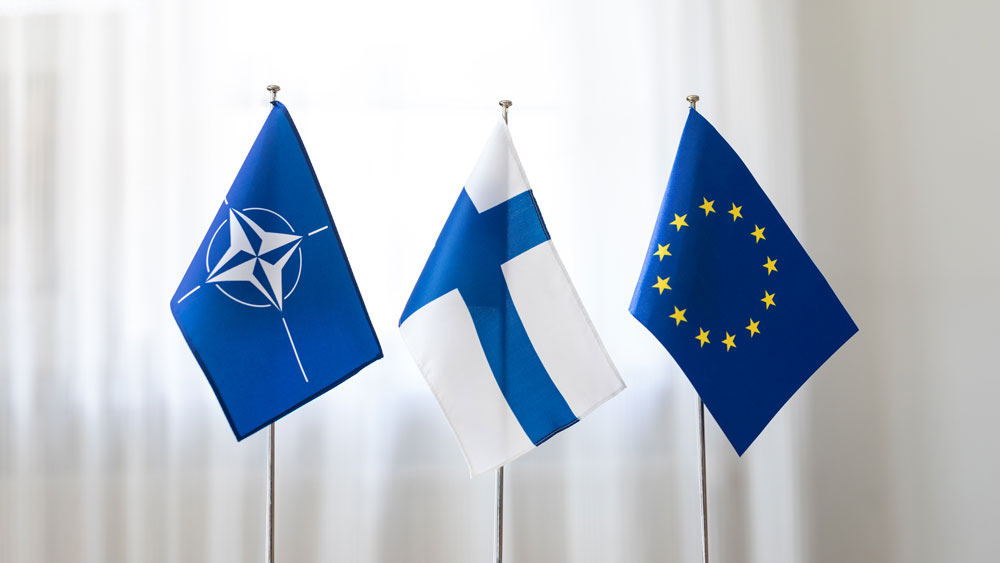
Finland has a well-functioning and unique security of supply system. The significance of international cooperation has increased alongside national preparedness measures, particularly as a result of the COVID-19 pandemic and Russia's war of aggression against Ukraine. Finland actively participates in international cooperation on security of supply, which takes place at the level of the European Union, NATO and the Nordic countries, as well as bilaterally. The cooperation complements national preparedness, which is the starting point for Finland’s security of supply model.
Bilateral cooperation
Finland has bilateral agreements with Sweden (107/1992) and Norway (55/2006) on economic cooperation during crises. The security of supply agreements in question include provisions on maintaining the exchange of goods, joint procedures and the exchange of information. The Ministry of Economic Affairs and Employment is the ministry responsible for both agreements. In addition, as a result of Council Directive 2009/119/EC, Finland has bilateral oil stockholding agreements with Sweden, Estonia, Denmark and Latvia.
Multilateral cooperation
Nordic cooperation
At Finland’s initiative, the Nordic Prime Ministers issued a joint statement on the development of cooperation on security of supply in 2021, stating that the Nordic region will become the most sustainable and integrated region in the world by 2030, and that together, the Nordic countries are better prepared to meet future challenges.
At a meeting of the Nordic Prime Ministers, Finland has proposed that comprehensive security in the Nordic region should be developed by creating a new Nordic security of supply network. The creation of the network, the objectives of the work and the operating practices have been prepared under the leadership of the Ministry of Economic Affairs and Employment, together with all of the Nordic countries and autonomous territories and regions.
EU preparedness
While the EU has traditionally not been considered to have the competence to directly regulate the national response to crises, EU legislation also extends to sectors that have direct or indirect impacts on national security. However, the Treaty of Lisbon, which entered into force in 2009, and the associated solidarity clause and mutual assistance clause have strengthened the EU’s position in matters pertaining to security of supply. In addition, the change in the security environment has meant that security of supply issues need to be increasingly addressed at the EU level.
From the perspective of security of supply, the EU's management of disruptions has strengthened in recent times, particularly with regard to energy security, the safeguarding of critical infrastructure, military security of supply and cybersecurity. In addition, the European Preparedness Union Strategy (JOIN(2025) 130 final) was unveiled in spring 2025 to complement other EU preparedness initiatives. The strategy includes a total of 66 actions.
One key regulation that influences security of supply is the Critical Entities Resilience (CER) Directive, which was enacted into law in Finland on 1 July 2025. The purpose of the Directive is to improve the resilience of critical services by expanding the range of preparedness measures.
The EU's cyber security directive (NIS2), in turn, aims to ensure a common level of cybersecurity. The NIS2 Directive was enacted into law in Finland on 8 April 2025. It improves the exchange of information concerning cybersecurity incidents and creates cross-border regulatory structures to support incident management.
- European Preparedness Union Strategy
- Critical Infrastructure Protection and Crisis Resilience Act
- NIS2 - European Union Cybersecurity Directive
NATO's resilience work
Following Finland's NATO membership, Finland participates fully in NATO's resilience work. The North Atlantic Treaty obligates NATO members to maintain national resilience against attacks, and national civil preparedness and security of supply arrangements are at the heart of this obligation.
NATO has no binding authority over the security of supply work of its members, but it has established an assessment model comprising seven baseline requirements that allow NATO members to assess their level of preparedness. The resilience work carried out in NATO should be examined alongside the resilience work carried out in the EU, as the Union's harmonised legislation has considerable significance with regard to the realisation of security of supply.
Henri Backman, Ministerial Adviser
Ministry of Economic Affairs and Employment, Employment and Well-Functioning Markets Department, Competition and security of supply, Huoltovarmuus HUOVA Telephone:0295063581 Email Address:
Eeva Vahtera, Senior Ministerial Adviser
Ministry of Economic Affairs and Employment, Employment and Well-Functioning Markets Department, Competition and security of supply Telephone:0295049009 Email Address: